

To choose outdoor porcelain paving for a UK patio, first confirm that the slabs are intended for external use and normally supplied in a 20 mm format. Then compare wet-weather slip information, frost resistance, water absorption, surface texture, dimensional consistency, face variation, colour, size, stock continuity and the delivered price. Country of origin and brand name may affect design and cost, but neither replaces the actual product specification.
Porcelain paving is widely chosen for UK patios because it combines consistent sizing, low water absorption and a broad choice of stone-, concrete- and slate-effect designs. However, products that look similar online may differ in surface grip, printed-face variation, edge finish, batch consistency, cleaning practicality and technical documentation.
This guide explains what buyers should check before ordering, how to compare products fairly, and how Indian, Italian and Chinese porcelain paving fit within the UK market. You can also browse our outdoor porcelain paving slabs or read the porcelain paving FAQs.
Quick Checklist for Choosing Porcelain Paving
| Feature | What to look for | Why it matters |
|---|---|---|
| Intended use | Clearly described as suitable for external paving | Indoor floor tiles may be thinner, smoother or unsuitable for conventional patio construction. |
| Thickness | Normally 20 mm for UK outdoor paving laid on a full mortar bed | Provides a practical balance of strength, handling and installation compatibility. Thickness alone does not prove quality. |
| Slip information | A tested external surface, commonly marketed as R11, with the test method stated where possible | Wet-weather grip matters, but an R rating should not be treated as the only measure of slip risk. |
| Water absorption | Technical information consistent with a dense porcelain body | Low absorption supports frost resistance, stain resistance and dimensional stability. |
| Frost resistance | Confirmed suitability for exterior freeze–thaw exposure | Important for year-round use in the UK climate. |
| Surface texture | Enough texture for external grip without being unnecessarily difficult to clean | Very aggressive textures can retain more dirt, while smooth finishes may be unsuitable when wet. |
| Edges and dimensions | Consistent, rectified or accurately cut edges with clear size tolerances | Helps installers maintain straight joints and control lippage. |
| Tile flatness | Reasonable flatness across the slab, especially on larger formats | Excessive bowing makes accurate installation more difficult. |
| Face variation | Several different printed faces, mixed before laying | Reduces obvious repetition across a larger patio. |
| Colour body | Standard printed-surface porcelain or through-colour/full-body construction, clearly identified | Full-body colour can make small edge chips less visible, but it is not essential for every project. |
| Sample and batch | A physical sample and confirmation that the main order comes from one batch | Screen colours vary, and separate batches may show shade differences. |
| Delivered price | Compare the total price per square metre, including VAT and delivery | A low headline price may exclude charges or reflect a different pack coverage. |
What Makes Porcelain Paving Suitable for Outdoor Use?
Check that it is genuine external paving
Outdoor porcelain should be specified for exterior use rather than selected solely because it is described as porcelain. For a conventional UK patio, the product normally needs an external textured face, frost-resistant performance and a format suitable for installation on a full mortar bed.
Many indoor porcelain tiles are thinner and may have a smoother finish. They can perform well in the setting for which they were designed, but that does not automatically make them suitable substitutes for 20 mm outdoor paving.
Is 20 mm porcelain necessary?
A thickness of 20 mm is the normal UK market format for outdoor porcelain paving laid on a properly prepared sub-base and full mortar bed. It is not a universal proof of quality, and it should not be considered in isolation.
Two slabs can both be 20 mm thick yet differ in dimensional accuracy, firing consistency, face variation, surface finish and technical evidence. The correct question is not simply “Is it 20 mm?” but “Is it a consistent 20 mm outdoor paving product with an appropriate surface and specification?”
Slip resistance: look beyond one label
For UK patios, the surface must provide practical grip in wet conditions. R11 is commonly used in outdoor porcelain product descriptions and can be a useful comparison point when it is based on a recognised ramp test. However, an R rating is not a complete guarantee that every installed surface will perform identically.
Slip risk also depends on water, algae, surface contamination, slope, footwear, wear and cleaning. The UK Health and Safety Executive notes that several test methods exist and places particular importance on measured wet performance rather than appearance alone. A visibly rough surface is not automatically safer, and a product should not be described simply as “non-slip”.
Practical check: Ask what slip test or classification supports the supplier’s claim, and choose a product explicitly intended for exterior pedestrian areas. Proper falls, drainage and routine cleaning remain essential after installation.
Water absorption and frost resistance
Porcelain is valued for its dense body and very low water absorption. In practical terms, less water enters the slab, reducing the opportunity for moisture-related staining and freeze–thaw damage. Nevertheless, buyers should still look for an exterior-use declaration or suitable test information rather than assuming that every product marketed as porcelain has identical performance.
Frost resistance matters because an outdoor patio remains exposed throughout winter. It should be considered together with correct installation: even a suitable slab can be undermined by standing water, inadequate falls, voids in the mortar bed or failed joints.
Rectified edges, dimensional tolerance and flatness
Rectified porcelain has edges mechanically finished to create more consistent dimensions. This supports orderly joint lines, but it does not mean the slabs should be laid tightly together. Outdoor paving still needs suitable joints to accommodate installation tolerances, drainage and movement.
Dimensional consistency and slab flatness are particularly important with formats such as 900 × 600 mm and 1200 × 600 mm. Excessive bowing or inconsistent thickness can increase lippage and slow installation. A competent installer should check and mix the slabs before laying rather than assuming every piece is identical.
Surface texture and cleaning
Porcelain paving is low maintenance, not maintenance free. A heavily textured surface may offer useful external grip but can retain more dust, atmospheric dirt and organic growth. Very light colours can show leaf tannins or general dirt, while very dark colours may show pale dust, mineral residue and dried cleaning marks more readily.
The best choice is usually a surface with sufficient tested external grip and a texture that can still be cleaned with normal patio-maintenance methods. Avoid choosing entirely by touch from one small sample; view the slab dry, wet and in natural daylight.
Pattern variation and repeated faces
Most stone-effect porcelain uses digitally printed surface designs. On a small sample, one face may look convincing, but a large patio can reveal obvious repetition if too few face designs are supplied.
Ask how many different faces are included in the range and make sure the installer opens several packs and mixes the designs before laying. There is no single mandatory number of faces, because the required variation depends on slab size, pattern complexity and patio area. As a practical rule, more convincing variation becomes increasingly valuable as the paved area grows.
Printed-surface porcelain and full-body colour porcelain
Most outdoor porcelain paving has a printed decorative face over a dense porcelain body. This is standard construction and should not be treated as a defect. Good-quality printed porcelain can provide durable service when correctly specified and installed.
Full-body or through-colour porcelain paving carries colour further through the slab. Its main practical advantage is that small edge chips can be less visually noticeable. It may justify a premium for exposed steps, edges or highly visible details, but it is not automatically necessary for every patio and should not be presented as proof that all other porcelain is inferior.
How to Choose Porcelain Paving Colour, Size and Design
Light grey porcelain
Light grey paving can make a confined garden feel brighter and works well with modern render, pale brick and contemporary planting. It generally shows fewer pale dust deposits than charcoal paving, although leaf staining and dark soil may be more visible.
Mid grey porcelain
Mid grey is often the most forgiving choice for UK patios because it balances brightness with practical dirt concealment. It combines easily with red brick, buff brick, timber, aluminium fencing and dark garden furniture.
Dark grey and black porcelain
Dark porcelain creates stronger contrast and a formal appearance. It can suit modern extensions and sharply defined planting, but pale construction dust, grout haze, hard-water marks and dried cleaning residue may be more noticeable. Dark slabs should therefore be judged in real outdoor light rather than from edited product images alone.
Beige, cream and natural stone effects
Beige and cream porcelain can soften a garden and complement traditional brickwork. Sandstone-, limestone- and travertine-effect designs are useful where the customer wants a natural appearance with the dimensional consistency and lower absorption of porcelain.
600 × 600 mm
Square 600 × 600 mm paving creates a regular grid and can suit compact patios or stack-bond layouts. It is easy to understand visually, although the number of repeated joints can make poor alignment more obvious.
900 × 600 mm
Porcelain paving 900 × 600 mm remains one of the most widely used UK patio formats. It gives a larger-scale appearance without becoming unmanageable for experienced installers and works well in stack bond, running bond and third-bond layouts.
1200 × 600 mm and plank formats
Longer formats create fewer joint lines and a more linear effect, but they place greater demands on substrate accuracy, handling and slab flatness. Plank porcelain can be effective for narrow gardens, paths and directional layouts, although repeated faces and bowing should be checked carefully.
Do not select size on appearance alone: Large slabs can reduce visible jointing, but they are heavier, less tolerant of an uneven base and more demanding to cut and align.
Should Country of Origin Determine Porcelain Quality?
Country of origin can influence design direction, labour cost, supply structure, stock continuity and brand positioning. It should not be used as a substitute for checking the actual product specification. A well-controlled factory in one country may outperform a poorly controlled factory elsewhere, and a high retail price does not establish technical superiority.
Indian porcelain paving in the UK market
Indian porcelain paving slabs account for a substantial part of UK supply. Major Indian factories use high-pressure pressing, controlled kiln firing and automated production systems capable of producing consistent outdoor porcelain for the British market.
India’s established natural-stone trade has also influenced its porcelain designs. Products such as Kandla Grey sandstone-effect porcelain, Raj Green porcelain, County Light Grey porcelain, Hammerstone Grey porcelain, Brazilian Black slate-effect porcelain and limestone-effect porcelain reflect colours and textures already familiar to UK paving buyers.
India’s price advantage is influenced by manufacturing scale, labour cost and its established export supply chain. That advantage should be assessed product by product rather than converted into a claim that all Indian porcelain is identical.
Factory scale and supply consistency
At Paving Slabs UK, we favour factory-backed supply from established manufacturers. Larger production operations can offer stronger process control, broader face variation and better continuity, but factory size alone does not guarantee every batch. Incoming quality checks, clear specifications and long-term supply management remain necessary.
Italian porcelain paving
Italian porcelain has a strong reputation for design development, surface expression and trend-led presentation. Buyers who prioritise a particular aesthetic or an Italian design identity may consider that premium worthwhile.
However, design prestige and functional outdoor performance are different questions. Italian origin does not, by itself, prove lower water absorption, greater frost resistance or longer service life than a product made elsewhere to a comparable specification. Its higher price can also reflect labour costs, design investment, branding, distribution and retailer positioning.
Chinese porcelain tiles in the UK market
Chinese ceramic tiles have historically been less visible in the UK because anti-dumping measures restricted much of the category. In October 2024, the UK retained the measure but excluded certain larger tiles: broadly, individual tiles with a surface area exceeding 0.36 m² or an edge longer than 600 mm, subject to the detailed relief conditions in the official notice.
This change created a practical route for selected larger Chinese porcelain formats to enter the UK market without the same anti-dumping duty. The wider measure remains in force until 24 November 2027 unless changed again, so claims should be checked against the current commodity description and official trade notice.
China has extensive ceramic manufacturing capacity and an integrated machinery and materials supply chain. Modern Chinese factories can produce technically credible porcelain, but—as with every country—the buyer should examine the individual specification, consistency, documentation and supplier support rather than relying on national reputation alone.
From 2025 onwards, our supply programme began introducing selected full-body porcelain outdoor tiles to the UK, with emphasis on transparent sourcing, consistent specification and direct supply.
How Can You Check the Origin of Porcelain Paving?
Use documentation first
The strongest evidence is the commercial and customs documentation held within the supply chain, supported by product labels, batch records and supplier declarations. Retail customers may not see every document, but a responsible supplier should be able to state the origin clearly and consistently.
What an ISPM15 pallet mark does—and does not—prove
Imported porcelain is commonly transported on solid-wood pallets that must comply with ISPM15 requirements when entering Great Britain. The mark includes a two-letter country code, a registered producer identifier and a treatment code such as HT for heat treatment or MB for methyl-bromide fumigation.
The country code identifies where the wooden packaging was treated and marked. It does not, by itself, constitute conclusive legal proof that the porcelain tile was manufactured in the same country. In normal full-pallet supply it can be useful supporting evidence, especially when it agrees with labels and documentation, but it must be interpreted correctly.
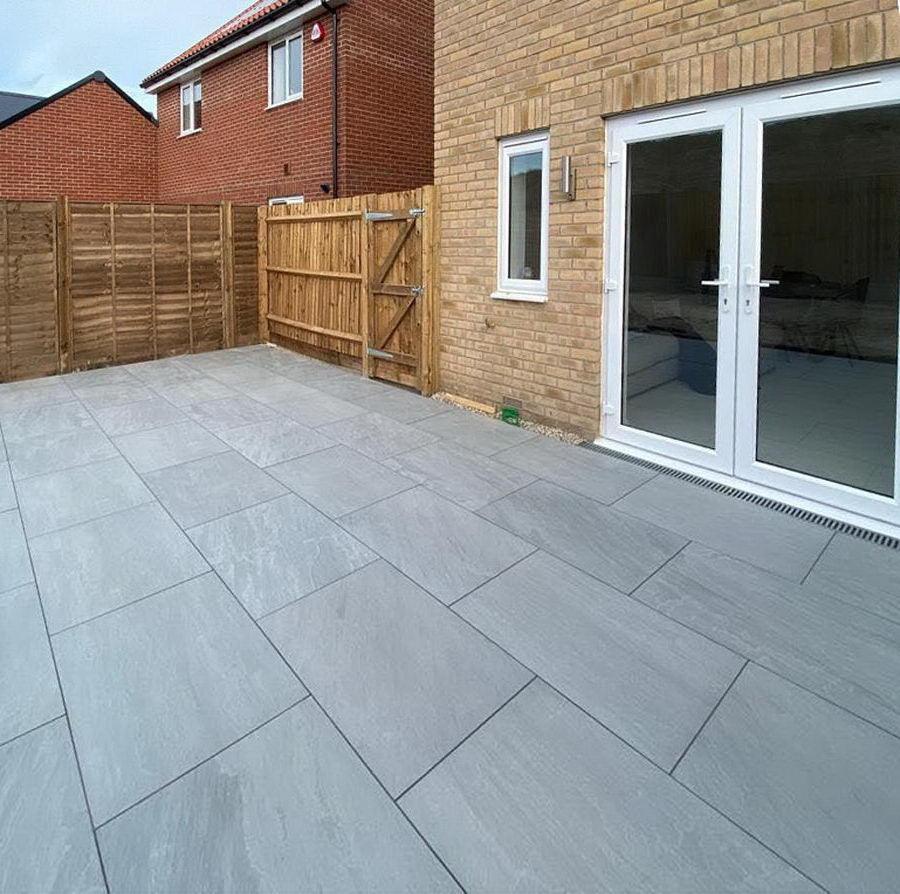

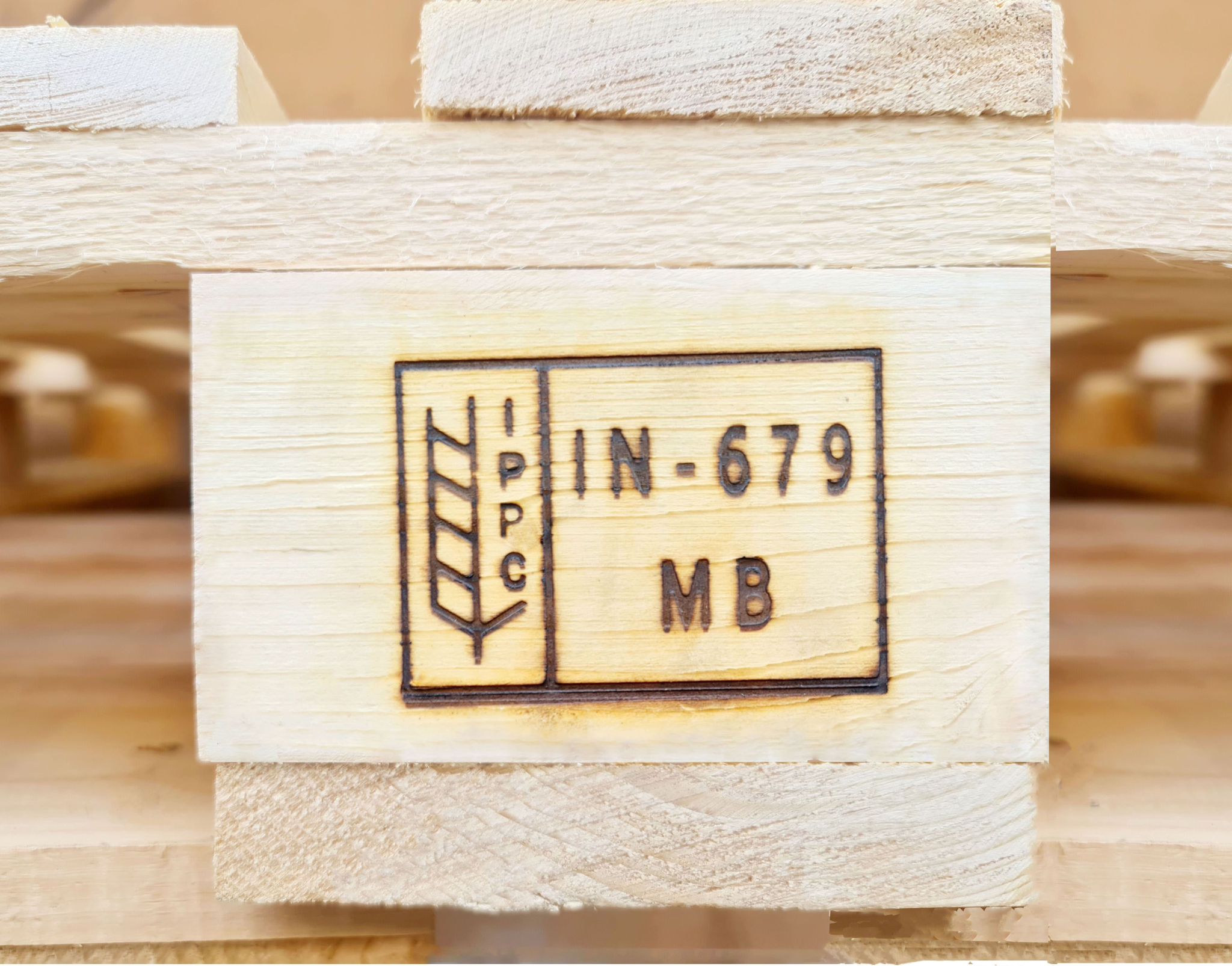


Practical buying guidance: Where a product is promoted heavily around a particular origin, compare that claim with the supplier’s written information, labels, batch records and available pallet evidence. No single marketing phrase or pallet stamp should be considered in isolation.
Does More Expensive Porcelain Mean Better Quality?
No. A higher price can reflect better design, broader face variation, stronger packaging, technical testing, warranty support, stock availability or customer service—but it can also reflect branding, retailer margin and a longer distribution chain. Price should therefore be compared against specification and service rather than treated as evidence on its own.
Very low prices also deserve analysis. A cheaper product may be excellent value, but the buyer should check whether the quotation includes VAT and delivery, whether the slabs come from one batch, whether replacement stock is likely to remain available, and whether technical information is provided.
For a fair comparison, calculate the delivered cost per square metre and compare:
- actual pack coverage;
- VAT and delivery;
- slab thickness and external suitability;
- surface and slip information;
- face variation;
- edge and dimensional consistency;
- full-body or printed-surface construction;
- batch continuity and replacement availability;
- breakage policy and customer service.
Market prices change with freight, exchange rates, stock levels and promotional activity. Any exact price range should therefore be dated and treated as an indication rather than a permanent quality benchmark.
Questions to Ask Before Ordering Porcelain Paving
- Is the slab specifically intended for outdoor paving?
- What is its actual nominal thickness?
- What slip-resistance test or classification is available?
- Is the product confirmed as frost resistant for exterior use?
- Is a technical data sheet available?
- How many different printed faces are included?
- Are the edges rectified or otherwise dimensionally controlled?
- What joint width does the supplier recommend?
- Is the slab printed-surface or full-body colour?
- Can I inspect a physical sample in daylight?
- Will the order be supplied from one batch?
- Does the price include VAT and delivery?
- Will matching stock be available if extra slabs are required later?
- How much extra should be ordered for cuts, selection and accidental breakage?
- What primer, mortar and jointing products are required?
Common Mistakes When Choosing Porcelain Paving
- Buying an indoor tile because it is cheaper or visually similar.
- Assuming every 20 mm slab has the same technical quality.
- Choosing entirely by colour without checking the surface in wet conditions.
- Treating R11 as an absolute guarantee rather than one item of test information.
- Ignoring texture and future cleaning requirements.
- Ordering without a physical sample.
- Failing to check repeated printed faces across a large patio.
- Comparing a delivered VAT-inclusive price with a headline price that excludes charges.
- Ordering only the exact measured area, with no allowance for cuts or selection.
- Using an installer who is unfamiliar with porcelain paving.
- Laying porcelain like sandstone without applying a suitable slurry primer to the underside.
- Using spot bedding instead of a continuous full mortar bed.
How Should Outdoor Porcelain Paving Be Installed?
Product quality and installation quality cannot be separated. For a conventional UK patio, porcelain paving is normally installed over a properly compacted sub-base, on a continuous full mortar bed with suitable falls for drainage. A compatible slurry primer should be applied to the underside immediately before laying to create a reliable bond with the mortar.
Porcelain should not be spot bedded, and the joints should not be closed tightly. The exact construction depth, drainage design and movement provision depend on site conditions. See our wider porcelain paving installation guides before work begins.
Final Recommendation: How to Select Porcelain Paving
The best outdoor porcelain paving is not identified by one country, one brand, one price or one marketing phrase. Select it by checking whether the slab is genuinely suitable for exterior use, normally 20 mm thick for conventional patio installation, supported by credible wet-slip and frost information, dimensionally consistent, practical to clean and visually varied enough for the size of the project.
Then compare colour, format, full-body or printed construction, batch continuity, technical documentation, supplier support and the total delivered cost. Country of origin can help explain design and price, but the product specification and the reliability of the supply chain should make the final decision.
Porcelain Paving Selection FAQs
How can I tell outdoor porcelain from indoor porcelain?
Check the stated intended use, thickness, exterior surface texture, frost resistance and available slip information. A porcelain label alone does not confirm suitability for a conventionally laid UK patio.
Is 20 mm porcelain always better than thinner porcelain?
No. Twenty millimetres is the normal format for conventional outdoor paving, but quality also depends on the body, firing consistency, dimensions, flatness, surface finish and installation. Thinner exterior systems exist for specialist applications, but they should not be treated as direct substitutes without checking the specified construction method.
What does rectified mean on porcelain paving?
Rectified means the edges have been mechanically finished to improve dimensional consistency. It supports straighter joint lines but does not mean the slabs should be installed without joints.
How many face variations should porcelain paving have?
There is no universal minimum. Larger patios and strongly patterned stone effects benefit from more face variation. Ask the supplier how many faces are included and ensure the installer mixes them before laying.
Is full-body porcelain worth paying more for?
It can be worthwhile where exposed edges or possible small chips would be highly visible. For a standard patio, well-made printed-surface porcelain can still provide excellent practical performance.
Can porcelain paving be installed in the same way as sandstone?
Not exactly. Porcelain has very low absorption, so a suitable slurry primer should be applied to the underside, and the slab should be laid on a continuous full mortar bed rather than spot bedding.
How much extra porcelain paving should I order?
The allowance depends on the layout, cuts, access and project complexity. A straightforward rectangular patio commonly requires less extra than a diagonal layout, narrow path or design with many cuts. Confirm the quantity with the installer and include enough for cutting, selection and accidental damage.
Technical note: Product specifications, trade-remedy rules and market prices can change. Confirm the current product data and applicable official guidance before ordering or making import decisions. This article provides general industry guidance and is not legal advice.


